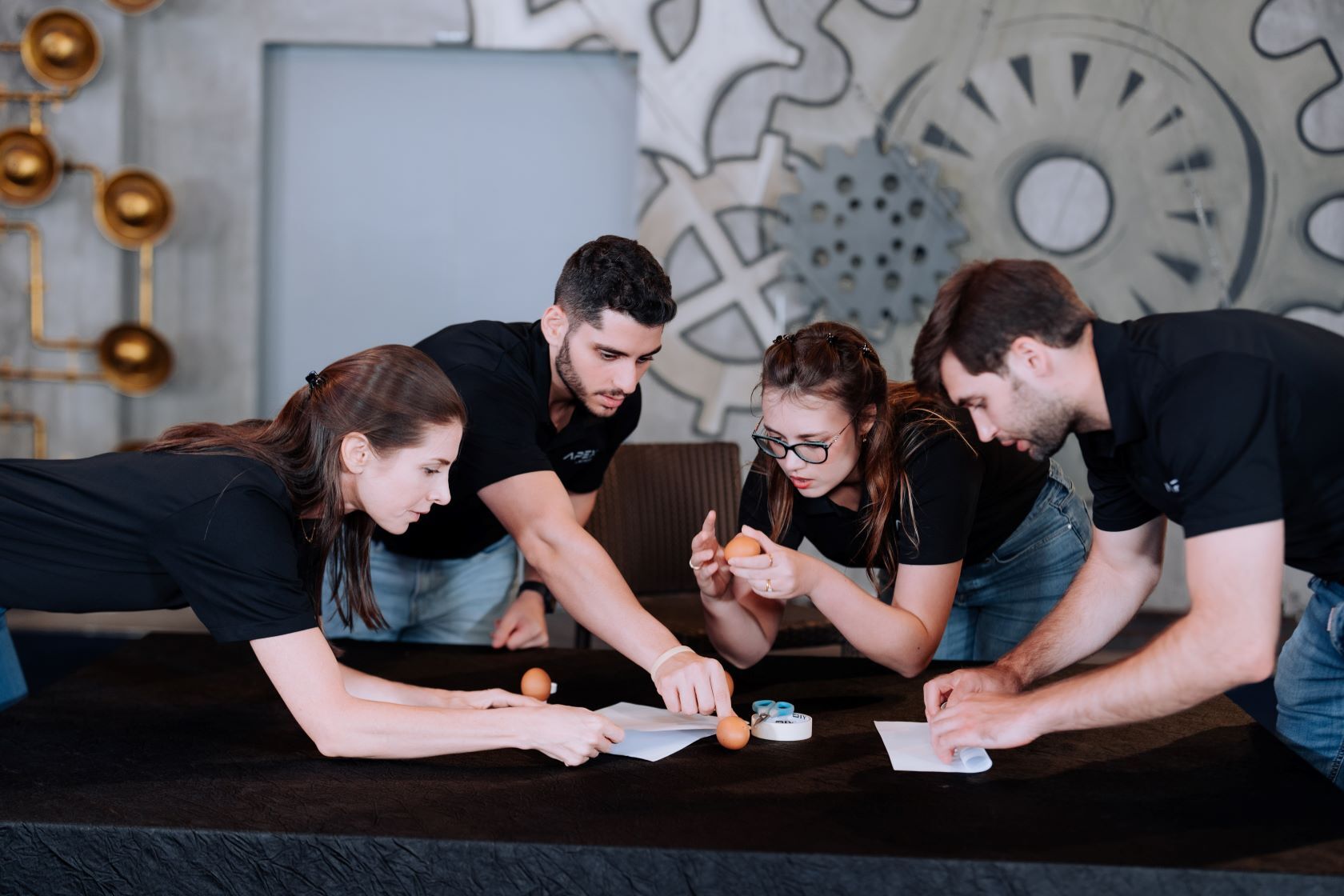
Ever wonder what turns a group of coworkers into a truly accountable team? It turns out trust is key, and trust often grows from shared experiences. For example, a Harvard Business School analysis found that doctors who trained together later achieved significantly better outcomes, highlighting that "personal connections and trust can improve performance, more so than incentives and rewards." Likewise, organizational research shows that team accountability tends to rise with members’ mutual trust and commitment. In other words, team-building activities, from project collaborations to offsite retreats, build the relational glue that helps people hold one another accountable.
Peer-to-Peer Accountability in Action
True accountability often comes from peers, not bosses. Leadership expert Patrick Lencioni emphasizes that "the best kind of accountability on a team is peer-to-peer." In practice, that means coworkers in a trusting team will speak up if someone falls short. Instead of finger-pointing, they coach and challenge each other to stay on track toward shared goals. As Lencioni observes, teams that hold each other accountable "excel" — becoming efficient, productive, and building stronger relationships. In other words, when teammates trust one another, they willingly take responsibility for the team’s commitments, just as a good manager would.
Team Challenges and Brain Synchrony
Fun team challenges can have surprising cognitive benefits. Neuroscience research shows that cooperation literally synchronizes participants’ brain activity: when people collaborate closely, their neural patterns and physiological rhythms align. This boosts empathy, engagement, processing speed, and learning. Put simply, shared problem-solving rewires the brain for teamwork. Moreover, shared wins tend to perpetuate more wins. For example, a Nature Human Behaviour study found that teams with prior shared successes were far more likely to win future competitions. In the authors’ words, "prior shared success between team members significantly improves the odds of the team winning." Practically speaking, when staff face a tough project, they often recall those earlier triumphs and instinctively pull together to replicate that success.
Emergent Leadership and Efficiency
A strong accountability culture makes leadership emerge organically. When everyone feels responsible, people step up without waiting for direction; problems get solved faster and more smoothly. High-trust, peer-accountable teams work remarkably efficiently. One analysis by McKinsey found that teams scoring above average on trust were 3.3 times more efficient than low-trust teams. In such teams, colleagues readily fill in each other’s gaps, make on-the-spot decisions, and move projects ahead. The result is a self-correcting, high-performance group where success feeds success and trust deepens with each shared achievement.
Taking the Next Step
Ready to bring these insights to your team? Consider designing team experiences that build trust and shared responsibility.
APEX Team Building’s programs create the kinds of collaborative challenges that foster mutual accountability. Explore our offerings on this website and contact us to create powerful shared experiences that will make your team stronger, more efficient, and more accountable.
P.S. Get started here: https://apexteambuilding.com/go
True accountability often comes from peers, not bosses. Leadership expert Patrick Lencioni emphasizes that "the best kind of accountability on a team is peer-to-peer." In practice, that means coworkers in a trusting team will speak up if someone falls short. Instead of finger-pointing, they coach and challenge each other to stay on track toward shared goals. As Lencioni observes, teams that hold each other accountable "excel" — becoming efficient, productive, and building stronger relationships. In other words, when teammates trust one another, they willingly take responsibility for the team’s commitments, just as a good manager would.
Team Challenges and Brain Synchrony
Fun team challenges can have surprising cognitive benefits. Neuroscience research shows that cooperation literally synchronizes participants’ brain activity: when people collaborate closely, their neural patterns and physiological rhythms align. This boosts empathy, engagement, processing speed, and learning. Put simply, shared problem-solving rewires the brain for teamwork. Moreover, shared wins tend to perpetuate more wins. For example, a Nature Human Behaviour study found that teams with prior shared successes were far more likely to win future competitions. In the authors’ words, "prior shared success between team members significantly improves the odds of the team winning." Practically speaking, when staff face a tough project, they often recall those earlier triumphs and instinctively pull together to replicate that success.
Emergent Leadership and Efficiency
A strong accountability culture makes leadership emerge organically. When everyone feels responsible, people step up without waiting for direction; problems get solved faster and more smoothly. High-trust, peer-accountable teams work remarkably efficiently. One analysis by McKinsey found that teams scoring above average on trust were 3.3 times more efficient than low-trust teams. In such teams, colleagues readily fill in each other’s gaps, make on-the-spot decisions, and move projects ahead. The result is a self-correcting, high-performance group where success feeds success and trust deepens with each shared achievement.
Taking the Next Step
Ready to bring these insights to your team? Consider designing team experiences that build trust and shared responsibility.
APEX Team Building’s programs create the kinds of collaborative challenges that foster mutual accountability. Explore our offerings on this website and contact us to create powerful shared experiences that will make your team stronger, more efficient, and more accountable.
P.S. Get started here: https://apexteambuilding.com/go